

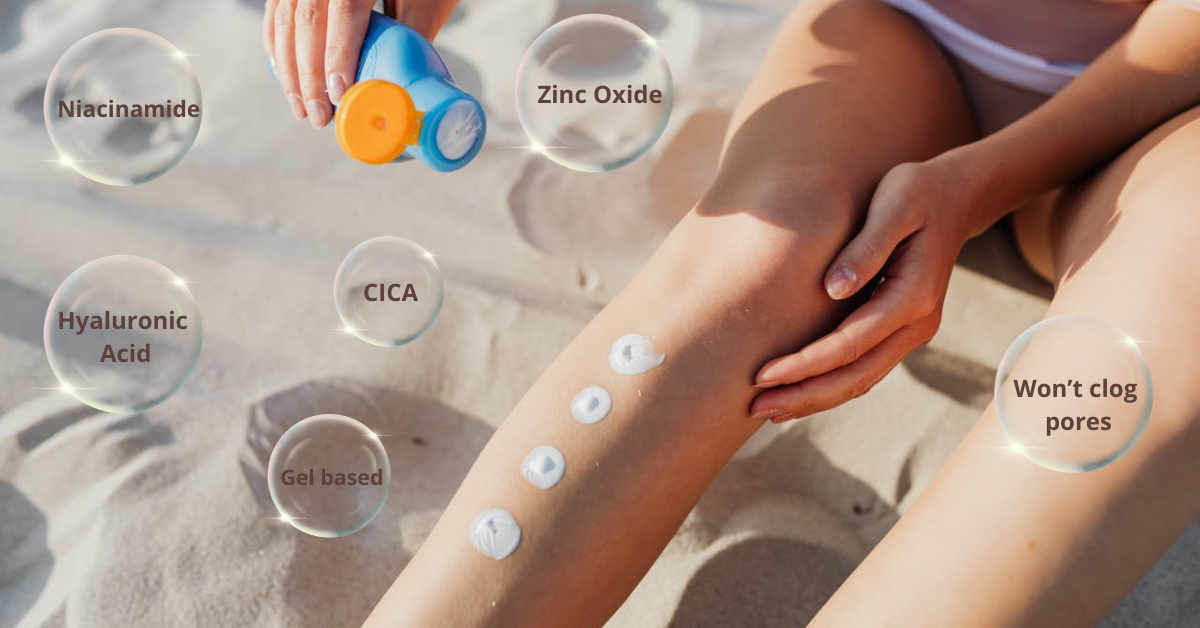
How to choose a sunscreen that won’t cause breakouts? It’s a question I asked myself countless times after experiencing painful breakouts from sunscreens I thought were “safe” for my skin. While sunscreen is one of the most crucial step in your skincare routine—protecting against premature aging, sun damage, and skin cancer—many formulas can clog pores and trigger frustrating breakouts, as I learned the hard way.
If you’ve ever wondered, “Why does my sunscreen cause acne?” or felt discouraged after yet another product left you with new blemishes, you’re not alone. I’ve been there, and the good news? You don’t have to choose between sun protection and clear skin.
After years of trial and error (and plenty of breakouts), I’ve discovered exactly what works. In this guide, you’ll learn how to select the right sunscreen for acne-prone skin, including the key ingredients to look for (and avoid), the difference between mineral and chemical sunscreens and what does ‘non – comedogenic’ actually means.
Table of Contents
Why Does Sunscreen Cause Breakouts?
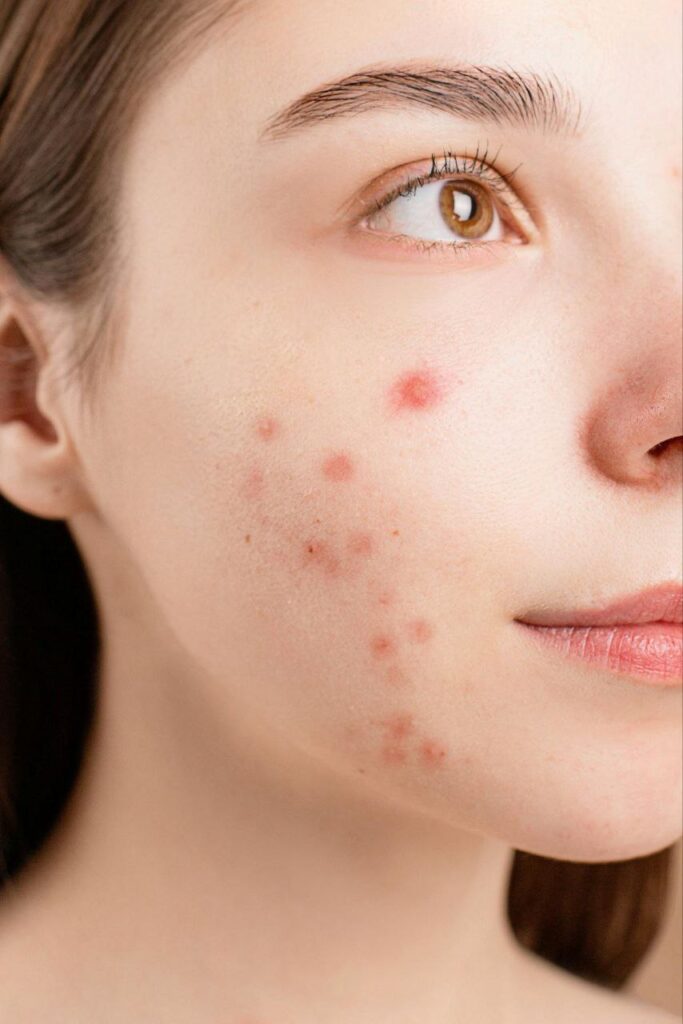
Many sunscreens contain heavy oils, thick emollients, and pore-clogging ingredients that sit on your skin like a cozy blanket, that your pores absolutely hate.
The main culprits behind sunscreen breakouts are:
- Occlusive ingredients like mineral oil, petrolatum, and certain silicones that trap oil and bacteria in your pores.
- Heavy moisturizing agents that are great for dry skin but turn oily or combination skin into an acne playground.
- Chemical filters that can cause irritation or allergic reactions, leading to inflammation that looks like acne (but might actually be contact dermatitis—your skin’s way of saying “nope!”).
- Fragrances and preservatives that irritate sensitive, acne-prone skin.
The good news? Once you know what’s causing the problem, you can avoid it. And that’s exactly what we’re going to do together.
Non-Comedogenic Sunscreen: What Does It Really Mean?
You’ve probably seen “non-comedogenic” slapped on every skincare product from moisturizers to makeup. But what does it actually mean, and more importantly, can you trust it?
Non-comedogenic literally means “won’t clog pores.” Sounds perfect, right? Well, here’s the plot twist I wish someone had told me earlier: the term isn’t regulated by the FDA. Yep, companies can basically call anything non-comedogenic without rigorous testing.
That said, many reputable brands do test their products to ensure they don’t cause comedones (those annoying clogged pores).
Here’s what you should know:
When a sunscreen is truly non-comedogenic, it means the formula is designed to:
- Not block your pores
- Allow your skin to breathe
- Minimize the risk of blackheads, whiteheads, and breakouts
My advice – Don’t just trust the label. Look at the actual ingredient list.
Key Ingredients to Look for in a sunscreen that won’t cause breakouts
Alright, let’s talk about the good guys—the ingredients that’ll protect your skin from the sun WITHOUT starting World War III on your face.
- Zinc Oxide: It is a mineral sunscreen ingredient that sits on top of your skin and physically blocks UV rays . But here’s the bonus: zinc oxide also has anti-inflammatory and antimicrobial properties. Means it calms your skin and kills bacteria.
- Titanium Dioxide: Another mineral filter that works similarly to zinc oxide. It’s gentle, effective, and won’t aggravate acne-prone skin. Some people prefer titanium dioxide if they find zinc oxide a bit too heavy, though both are generally well-tolerated.
- Niacinamide (Vitamin B3): It helps regulate oil production, reduces inflammation, and can even fade acne scars.
- Hyaluronic Acid: This lightweight humectant hydrates without adding oil or clogging pores. Your skin stays plump and happy without that greasy sunscreen feeling.
- Dimethicone: Before you freak out—yes, this is a silicone, but it’s actually one of the good ones. It is non-comedogenic and helps sunscreen spread smoothly without feeling heavy.
- Centella Asiatica (CICA): It is anti-inflammatory in nature means it calms down the redness and active pimples.
Pro tip: You can check whether your skincare products (or sunscreen in particular) do contain any comedogenic ingredients here.
Ingredients to Avoid If You Have Acne-Prone Skin
These are the ingredients that have personally betrayed me (and probably you too, if you’re reading this with a fresh breakout):
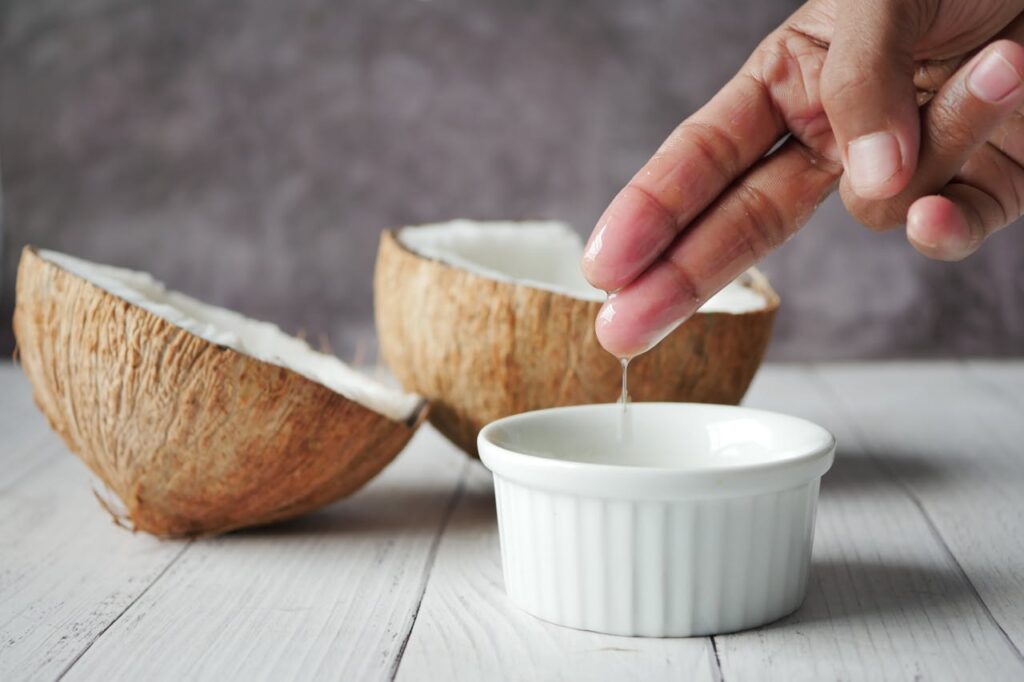
- Coconut Oil: It is highly comedogenic.
- Cocoa Butter: Too thick, too rich, too likely to cause breakouts.
- Isopropyl Myristate and Isopropyl Palmitate: These are synthetic oils that help products feel smooth and luxurious. Unfortunately, they’re also notorious for clogging pores.
- Algae Extract: Sounds natural but comedogenic and can trigger breakouts, especially if you’re prone to fungal acne.
- Fragrance (Parfum): Even if a sunscreen has the perfect formula otherwise, added fragrance can irritate your skin and cause inflammation. And inflamed skin is more likely to break out. Plus, do you really want your face smelling like “tropical paradise” all day?
- Avobenzone, Octinoxate, Oxybenzone (in high concentrations): These are chemical sunscreen filters. They’re not inherently bad, but some people with sensitive or acne-prone skin find they cause irritation or allergic reactions.
You can find more comedogenic ingredients here.
Mineral vs Chemical Sunscreen: Which Is Better for Acne-Prone Skin?
Let me break it down for you based on my experience and what actually matters for acne-prone skin.
Mineral Sunscreen (Physical Sunscreen)
How it works:
Contains zinc oxide and/or titanium dioxide that physically block/reflect UV rays.
Pros for acne-prone skin:
- Less likely to irritate or cause breakouts
- Works immediately (no wait time)
- Anti-inflammatory properties help calm acne
- Better for sensitive skin
- Doesn’t break down in the sun
Cons:
- Can leave a white cast (though newer formulas are way better)
- Sometimes feels thicker or heavier
- Can be harder to blend
Chemical Sunscreen
How it works:
Contains ingredients that absorb UV rays.
Pros:
- Usually feels lighter and more elegant on skin
- No white cast
- Easier to reapply over makeup
- Often more cosmetically appealing
Cons:
- Higher risk of irritation and allergic reactions
- Can clog pores depending on formula
- Needs 15-20 minutes to become effective
- Some people find they cause stinging or breakouts
My take: If you want to try chemical sunscreens, look for newer-generation filters like Tinosorb M and S or Uvinul A Plus, which are more stable and less irritating.
For acne-prone skin, I’d recommend starting with mineral sunscreen. It’s just safer and less likely to cause problems. But everyone’s skin is different—if you find a chemical sunscreen that works for you, go for it!
Hybrid sunscreens
Combination of both is also an option if you want the best of both worlds.
How to Choose the Right Sunscreen Texture for Your Skin Type

Here’s something I learned the hard way: the texture of your sunscreen matters just as much as the ingredients. You could have the perfect formula, but if it’s the wrong texture for your skin type, you’re still going to break out.
I once found a sunscreen with flawless ingredients and still broke out. After some research, I realized the thick, creamy texture was suffocating my pores. The formula was fine; it just wasn’t right for my acne-prone skin. This is why texture is just as important as ingredients—don’t sleep on this detail.
For Oily Skin:
Go for gel-based, fluid, or ultra-light lotions. These textures absorb quickly and won’t leave you looking like you dipped your face in olive oil by lunchtime. Look for words like “ultra-light,” “gel,” “fluid,” or “dry-touch” on the label.
Some sunscreens contain oil-absorbing ingredients like silica that help control shine throughout the day.
For Combination Skin:
Lightweight lotions or creams work best. You want something that hydrates your dry areas without overloading your T-zone.
For Sensitive, Acne-Prone Skin:
Stick with mineral sunscreens in a gentle lotion or cream formula. Avoid anything with fragrance, essential oils, or alcohol which can be drying and irritating.
Pro tip: Test new sunscreens on a small area (like your jawline) for a few days before applying it all over your face.
Best Sunscreen Application Tips to Prevent Breakouts
Okay, so you’ve found the perfect sunscreen (congrats!). But here’s the thing—if you’re not applying it correctly, you might still break out. So, here are some rules:
- Always apply after cleansing, toner (serum, if you use it in the morning) and moisturization.
- Use the right amount (your index and middle finger length for face and neck, if you feel too greasy then use ‘layering technique’ – first apply half of the amount then after 1-2 minutes, apply rest of it).
- Give your sunscreen at least 15 minutes to fully absorb before going outside.
- Reapplying is crucial. Reapply it if you are in continuous sun exposure, after swimming or sweating. If you are not wearing any makeup then, clean the sweat and excess oil with a blotting paper and apply the sunscreen but if you are wearing makeup then, sunscreen sprays would be better.
- Removal of sunscreen is essential. Double cleanse at night.
Top Mistakes That Make Sunscreen Cause Acne breakouts
These mistakes kept me breaking out even when I thought I was doing everything right:
- Using last summer’s sunscreen. Please do check the expiration date, use it within 6-12 months once opened.
- Layering too many products can cause problems. keep it simple in the morning and use treatment in the night.
- Not adjusting for the seasons. I didn’t know this fact that you have to change sunscreen according to season. Use a very light sunscreen in the summer and in winter you can use a bit creamy if your skin allows it.
- Skipping sunscreen on “low UV” days. “It’s cloudy, I don’t need sunscreen today.” Famous last words. That’s very common but you’ve to wear sunscreen every single day.
Final Thoughts
You now have everything you need to choose a sunscreen that won’t cause breakouts.
Let’s recap the game plan:
- Prioritize ingredients like zinc oxide, titanium dioxide, niacinamide, and hyaluronic acid
- Avoid pore-clogging culprits like coconut oil, cocoa butter, and heavy fragrances
- Look for gel-based or oil-free formulas suited to your skin type
- Master your application and cleansing techniques (they matter more than you think!)
Since I started following these exact guidelines, I’ve reduced my sunscreen-related breakouts by about 80-90%. Sure, I still get the occasional pimple (we’re human, after all), but it’s no longer because of my sunscreen. The best part? Once you find YOUR sunscreen, wearing it daily becomes effortless. No more dreading that step in your skincare routine.
Stay protected, stay clear!
Pingback: Why is my Acne worse after starting salicylic acid? (Purging vs breakout explained) - Bloom